
Kitlab

For Parents

Frequently Asked Questions About Our Research

What is involved?

  • One visit to the Pitt KiT lab where your child will play age appropriate games with our staff. 
  • Visits typically last between 30-60 minutes.

What does it cost to participate?

  • There are no costs to you!
  • Your children will receive a small toy as a token of appreciation.
  • Free parking conveniently located next to our building.

Why should we participate?

  • Children have fun playing our games and parents enjoy learning more about their child’s development. 
  • Helping researchers understand how children learn will lead to improvements in education and policy!

What to Expect During Our Research Studies
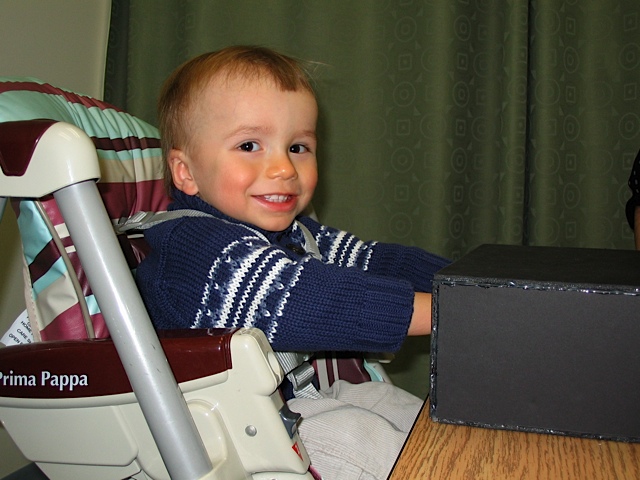
child in child seat

Infant Studies

Infants will sit in an infant seat or on a parent's lap and view pictures or videos displayed on a computer screen. We measure where infants look and how long they spend looking at the screen. Parents will be with their infant at all times. 

Studies take approximately 5 - 15 minutes.
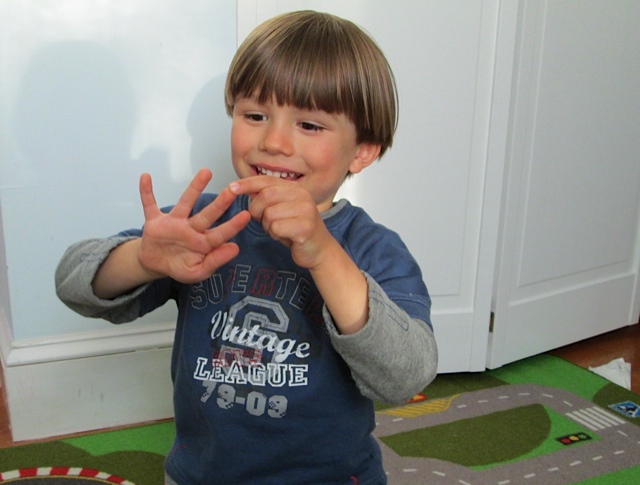

child counting fingers

Child Studies

Children will either view pictures on a computer screen or play fun and interactive games with an experimenter. Parents will be with their child at all times. 

Studies take approximate 15 - 45 minutes.
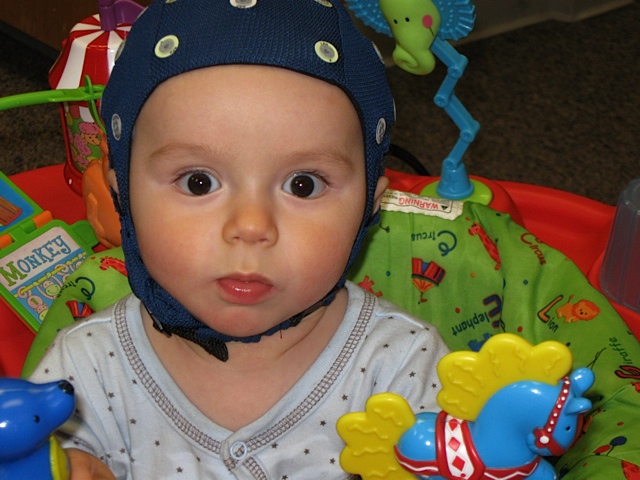

child with EEG cap

EEG Studies

What will happen during my baby's appointment? Children will sit in a high chair or in a parent's lap and watch sequences of images on a computer screen or play a simple computer game while we measure their brain activity using a cap. Parents will be with their child at all times.

Studies take 5-15 minutes but the entire visit will take about an hour because we need some extra time to get children ready for the study.


What does the cap look and feel like? 

  • The cap looks like a small swim cap. It's made of a stretchy light canvas. It is slightly elastic but not tight like a swim cap. 
  • There are around 30 small metal disks sewn into the cap.

How will you record my baby's brain waves? 

  • The cap contains small metal disks that, when filled with gel, allow a computer to record the responses of your baby's brain.

What is a brain wave? 

  • A brain wave/brain response/brain potential is the electrical signal that the cells (neurons) give off when they fire/are active. 

What is the experiment about? How does it work? 

  • We are trying to find out what babies know about numbers even before they have learned how to count or have much experience in dealing with numbers.
  •  We are investigating whether and how infants’ brains detect the numerosity of a set of objects. 
  • The technique that we are using allows us to measure brain waves with very precise time resolution so that we can study how the brain works while it's processing information. 

What will my baby and I get from this experience? 

  • We will not be able to tell you what your baby in particular knows about numbers, but you will be contributing to research that helps us understand how the brain develops and how infants learn. 
  • If you like, we will email you the results of the study and a complete explanation once the study has been completed. 
  • You will also get to see your baby's brain waves as soon as we have completed the study. 
  • In addition, your child will receive a toy as a token of appreciation. 

How long will I be there? 

  • You will be here for 45 minutes to an hour. 
  • The cap takes 15-20 minutes to put on. The study without breaks takes about 5-15 mins. 
  • Additional time is used to park, fill out paperwork, and ask questions. 

What are the risks? 

  • Brain waves will be measured using standard machines designed to make the procedure harmless. 
  • All equipment is approved by the Food and Drug Administration (FDA) and is widely used in clinical and research settings. 
  • If you feel uncomfortable with the procedures, you can always choose to end the study or not have your child participate. 

Can I bring a sibling? 

  • You can bring a sibling but it is important to understand that while we will have staff available to supervise your other child(ren) you will not be able to interact with that child during the study. We need you to stay with your baby. We do have toys available to entertain other children, but if you think your child would be unhappy to spend an hour with people he/she does not know you may want to find alternate care or a more convenient time for your appointment.

Helpful Links for Parents

Need ideas for fun math activities for a preschool-aged child? Here are some suggestions!

As parents, we are constantly inundated with advertisements for educational toys that will jumpstart and accelerate our children’s development. Figuring out which claims can be trusted and which ones are not supported by research (yet) can be difficult. Undergraduate students in Dr. Libertus’ Cognitive Development course at the University of Pittsburgh evaluated some advertised claims and summarized their findings as part of an assignment. Some of these summaries can be found below. Please note that we neither directly test these toys nor the advertised claims of the manufacturers. Students merely used research that is currently available to infer whether claims may be plausible or not.

The VTech Touch and Learn Activity Desk Deluxe functions as an interactive desktop with activity cards that claim to fulfill different learning objectives. One card at a time is inserted into the desktop and children can play different learning games with it. For example, with the "Alphabet & Letter Sounds" card, the child can touch the letters to hear the letter sounds/words, listen to a clue and find the corresponding letter, touch a letter to see it written on a screen, or play a game with the alphabet song. Some of VTech’s claims suggest that this toy can assist children's language development. VTech claims that the activity in which children tap on a letter and see it written out step by step on a screen can help children in their ability to recognize and write letters. Research has shown that handwriting, as opposed to typing or tracing letters, does help children in their recognition of letters as well as activate brain areas that are involved in more complex reading skills. If children are actively engaged and practicing writing the letters for themselves, it is reasonable that this activity would help them in acquiring language skills. Another claim VTech makes is that children can learn reading comprehension and expand their vocabularies through an activity where they are read a story aloud and can tap on different objects on the pages to interact with the story. While research on virtual books is a relatively new field, studies suggest that since the pages’ interactive components are related to the story content, they would actually benefit children rather than just entertaining and distracting them. Research also suggests that children would see the greatest benefits from using a toy like the Touch and Learn Activity Desk if a parent was present and engaging with the toy as well. The desk is designed so that it can help children acquire foundational skills that are necessary for further language development, but this is most likely to happen if parents are playing with the children at the desk, as face to face interaction is critical for learning language skills. 

References: 

James, K. H., Engelhardt, L. (2012). The effects of handwriting experience on functional brain development in pre-literate children. Trends in Neuroscience and Education, 1(1), 32-42. doi:10.1016/j.tine.2012.08.001 

Longcamp, M., Zerbato-Poudou, M., & Velay, J. (2005). The influence of writing practice on letter recognition in preschool children: A comparison between handwriting and typing. Acta Psychologica, 119(1), 67-79. Click for DOI 

Reich, S. M., Yau, J. C., & Warschauer, M. (2016). Tablet-based eBooks for young children: What does the research say? Journal of Developmental & Behavioral Pediatrics, 37(7), 585-591.

The Sounds Like Phonics – Letter Fun Lotto is an educational toy that allows children ages three and above to practice various skills involving the alphabet. The game comes with four lotto boards, thirty-six lotto tiles and fifty round markers. The pieces of the game allow for multiple styles of matching games as well as a bingo game. Discovery Toys claims that through game play children are able to strengthen their emerging reading skills, build recognition of upper and lower-case letters and enhance their knowledge of the initial sounds made by each letter. Lotto tiles are printed with “hidden letter picture cues”– a picture of an object that begins with the letter is presented in a shape of the letter. Previous research has shown that embedded mnemonics such as these hidden cues help children learn the sound associated with each letter. The game also encourages children to match the letter shapes to pictures and words that begin with the letter. Matching provides children with the opportunity to practice recognizing letters, words and the initial sounds of these letters and words, all of these skills have been identified as key skills in early reading. Overall previous psychological research shows that the learning experiences provided by the toy may be beneficial to the advertised areas. 

References:

Gregory, R. P. (1984). An aid to learning letter–sound correspondences. School Psychology International, 5(4), 224-232. doi:http://dx.doi.org/10.1177/0143034384054007 

Muter, V., Hulme, C., Snowling, M. J., & Stevenson, J. (2004). Phonemes, rimes, vocabulary, and grammatical skills as foundations of early reading development: Evidence from a longitudinal study. Developmental Psychology, 40(5), 665-681. doi:http://dx.doi.org/10.1037/0012-1649.40.5.665 

Shmidman, A., & Ehri, L. (2010). Embedded picture mnemonics to learn letters. Scientific Studies of Reading, 14(2), 159-182. doi:http://dx.doi.org/10.1080/10888430903117492

The Leap Frog "My Pal Scout" is a green or purple stuffed toy dog that is meant for kids 3-36 months old. It can talk, remember a child's name, play music, and play games. Leap Frog claims on their website that Scout can teach kids early learning concepts such as counting, music, and language development by improving their listening skills through talking to them. Scout's ability to talk to the child is helpful because studies show that children learn language, in large part, by picking up on patterns that they hear in speech over time. Some such patterns are word spacing and inflection, and children do this in the target age group for the toy. The toy provides yet another way for children to hear those patterns in their native language. The toy can also teach the child how to spell their name through a rhythmic spelling-aloud function. These features are great, and can be helpful for a child but, research shows that it will never live up to actual human interaction. If a parent buys this toy for their child, it is important for them to remember that playing with their child is more effective for learning than any toy or computer ever could be. 

References: 

Barr, R. (2013). Memory Constraints on Infant Learning From Picture Books, Television, and Touchscreens. Child Development Perspectives, 7(4), 205-210. 

Freedman, M. (2016, May). Traditional toys are best for babies' language development. Contemporary Pediatrics, 33(5), 13+. 

Masapollo, M., Polka, L., & Ménard, L. (2016). When infants talk, infants listen: pre‐babbling infants prefer listening to speech with infant vocal properties. Developmental Science, 19(2), 318-328. 

Saffran, J. R., Aslin, R. N., & Newport, E. L. (1996). Statistical learning by 8-month-old infants. Science, 1926-1928.

There are many children's toys that offer educational benefits to your child as well as allow them to play and have fun. An example of a toy like this is Fisher-Price’s Learn & Laugh First Words Number Blocks. This toy is a brightly-colored block set with numbers and fun designs on the sides of the blocks. The numbers on the blocks can be read aloud by an additional accessory that is purchased separately. The First Word Number Blocks are for children age 9-36 months. Fisher-Price claims that these toy blocks can help expand your child’s vocabulary. There is research that backs up their claim. It has been found that live interactive learning is superior to televised learning programs. It has also been found that word repetition helps with learning vocabulary. The First Words Number Blocks are an interactive toy that, when paired with an additional accessory that is able to read the numbers on the sides of the blocks, can help a child expand their vocabulary. Additionally, building blocks are beneficial for brain development because they promote spatial understanding in children. Because of these reasons, a child can have fun while learning when playing with First Words Number Blocks. 

References: 

DeLoache, J. S., Chiong, C., Sherman, K., Islam, N., Vanderborght, M., Troseth, G. L., O'Doherty, K. (2010). Do babies learn from baby media? Psychological Science, 21(11),1570-1574. doi:http://dx.doi.org/10.1177/0956797610384145 

Gurteen, P. M., Horne, P. J., & Erjavec, M. (2011). Rapid word learning in 13- and 17-month-olds in a naturalistic two-word procedure: Looking versus reaching measures. Journal of Experimental Child Psychology, 109(2), 201-217. Click for DOI 

Jirout, J. J., & Newcombe, N. S. (2015). Building blocks for developing spatial skills: Evidence from a large, representative U.S. sample. Psychological Science, 26(3), 302-310. Click for DOI

The widely popular Baby Einstein videos assert that watching these videos can be mentally beneficial to your child and speed up their development, in many areas, such as word learning. I examined, "Baby’s Favorite Places-First Words Around Town" aimed at children 12 months of age or older. This video illustrates common places a child would visit. For instance, a park is shown and an adult narrator would say that it was a "park" and would use sign language to indicate "park". This sequence is repeated with a child narrator. Thus, the video would play into different senses of the child and allow them to hear, see, and watch someone sign "park". The notion being that children will learn the words of common places. Several research studies however, demonstrate that children struggle with transferring what they learn from a screen to real-life. One research study found that there was no difference in word learning from children who watched videos versus those who did not. Children who received teaching from their parents actually learned the most words. Similar results were found in another study where viewing a video did not influence the number of words children learned. Overall, children appear to gain the greatest benefit from a live interaction with a parent or caregiver. Thus, the claims being made by the manufacturers of Baby Einstein's videos are not supported by scientific research. Perhaps parents should skip the toy store and the purchasing of these videos, opting to interact with their child for the greatest learning to occur. 

References:

American Academy of Pediatrics. Committee on Public Education. (2001). Children, adolescents, and television. Pediatrics, 107, 423-426 

Anderson, D. R., & Pempek, T. A. (2005). Television and very young children. American Behavioral Scientist, 48, 505-522.

Barr, R., & Hayne, H. (1999). Developmental changes in imitation from television during infancy. Child Development, 70, 1067-1081. 

DeLoache, J., Chiong, C., Sherman, K., Islam, N., Vanderborght, M., Troseth, G., Strouse, G., & O'Doherty, K. (2010). Do Babies Learn From Baby Media?. Psychological science, 21, 1570-1574. 10.1177/0956797610384145. 

Richert R.A., Robb M.B., Fender, J.G., Wartella E. (2010). Word Learning From Baby Videos. Archives of Pediatric and Adolescent Medicine, 164(5), 432–437. doi:10.1001/archpediatrics.2010.24

K'NEX, a three-dimensional building toy, is advertised for preschool to high school students as a means of cultivating future success within the academic fields of science, technology, engineering, and mathematics (STEM). Based on the manufacturer's claims concerning the benefits of the toy, skills associated with this success may be fostered by the development of spatial awareness, which can be defined as a child’s awareness of her own or an object's position relative to other people and objects in space. In addition, advancements of intellectual curiosity, creativity, and problem solving capabilities as well as the ability to visualize and rotate objects within one's mind would increase a child's future academic success, according to both the toy manufacturer and various research studies. These are all skills acquired with K'NEX as children affix these straw-like rods into connectors at a 45 or 90-degree angle. For example, one study explains that while a child builds the base of certain structures, such as the square shape that would make up a model skyscraper, geometry and patterns are introduced. Other building toys, such as blocks and Legos, only allow for building upwards and horizontally; however, K'NEX allows children to construct models in three directions: upwards, horizontally, and diagonally. As confirmed by researchers, this extra dimension promotes greater applications of mathematic skills, such as geometric shapes as well as mental rotation and spatial awareness. Overall, while children assemble and explore their models of the world, K’NEX effectively provides both an entertaining and educational platform for the acquisition of basic STEM concepts. 

References:

Lourenco, S., Bonny, J., Fernandez, E., & Rao, S. (2012). Non-symbolic Number and Cumulative Area Representations Contribute Shared and Unique Variance to Symbolic Math Competence. Proceedings of the National Academy of Sciences of the United States of America, 109(46), 18737-18742. 

Moreau, P. C. & Engeset, M. G. (2016). The Downstream Consequences of Problem-Solving Mindsets: How Playing with LEGO Influences Creativity. Journal of Marketing Research: February 2016, 53(1), 18-30. 

Sarama, J. & Clements, D. H. (2009). Building Blocks and Cognitive Building Blocks: Playing to Know the World Mathematically. American Journal of Play, Winter 2009, 313- 337. 

Stiles, J. & Stern, C. (2001). Developmental Change in Spatial Cognitive Processing: Complexity Effects and Block Construction Performance in Preschool Children. Journal of Cognition and Development, 2, 157-187. 

Tracy, D. M. (1987). Toys, spatial ability, and science and mathematics achievement: Are they related? Sex Roles, 17, 115-138.

Baby Genius' Learn with Me EduPad Tablet marketed towards 24-36-month-old children makes the claim that it "helps develop age appropriate skills in hand-eye coordination, fine motor, letter, number, shape and color recognition, early problem-solving." This tablet is a toy that provides buttons of the letters of the alphabet, the numbers 1-10, and the three play modes: 'Learning,' 'Find It,' and 'Music.' Though this toy is multifunctional, its claim is exaggerated since there are no features on this toy regarding shape or color recognition. Research reveals that the method of letter and number learning on this tablet is insufficient. The toy's number mode uses counting to define a number, for example "one, two, three, this is the number three." Research studies found that this type of number-learning emerges at age 3 1/2 using objects instead of audible counts, showing this toy is not age-appropriate. Furthermore, this toy's letter learning only exposes letters but not teach their sounds. Acquiring letter knowledge has been found to help children learn to read better if that letter knowledge includes the sound of each letter, which this toy neglects to expose to children. Additionally, research on human interaction and toys has found that parents often let electronic toys such as this one do the talking. An abundance of research shows that children learn best from human interaction and because of this, a way to improve number skills using toys such as the tablet is by having an older individual visually show the child number quantities, such as counting on fingers. This would teach the broad concept of numbers. The Baby Genius’ Learn with Me EduPad Tablet claims regarding cognitive development can only be exactly true when paired with meaningful adult interaction while using the toy. 

References: 

Hulme, C., & Snowling, M. J. (2013). Learning to Read: What We Know and What We Need to Understand Better. Child Development Perspectives, 7(1), 1-5. doi:10.1111/cdep.12005 

Kuhl, P. K., Tsao, F.-M., & Liu, H.-M. (2003). Foreign-language experience in infancy: Effects of short-term exposure and social interaction on phonetic learning. Proceedings of the National Academy of Sciences of the United States of America, 100 (15), 9096–9101. doi:10.1073/pnas.1532872100 

Phillips, B. M., Piasta, S. B., Anthony, J. L., Lonigan, C. J., & Francis, D. J. (2012). IRTs of the ABCs: Children’s Letter Name Acquisition. Journal of School Psychology, 50 (4), 461–481. doi:10.1016/j.jsp.2012.05.002 

Sosa, A. V. (2016). Association of the Type of Toy Used During Play With the Quantity and Quality of Parent-Infant Communication. JAMA Pediatrics, 170(2), 132–137. doi:10.1001/jamapediatrics.2015.3753 

Wynn, K. (1990). Children’s understanding of counting. Cognition, 36(2), 155-193. doi:10.1016/0010-0277(90)90003-3