
April 23, 2026
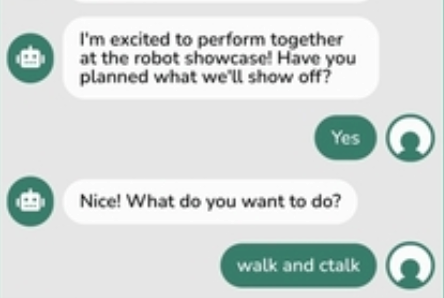 Dialogue systems have long supported learner reflections, with theoretically grounded, rule-based designs offering structured scaffolding, but they often struggle to respond to shifts in engagement. Large Language Models (LLMs), in contrast, can generate context-sensitive responses but are not informed by decades of research on how learning interactions should be structured, raising questions about their alignment with pedagogical theories. In this paper, University of Pittsburgh researchers and their colleagues* present a hybrid dialogue system that embeds LLM responsiveness within a theory-aligned, rule-based framework to support learner reflections in a culturally responsive robotics summer camp. The rule-based structure grounds dialogue in self-regulated learning theory, while the LLM decides when and how to prompt deeper reflections, responding to evolving conversation context.
Sharma, P., Sha, Y., Fofang, J. S. B., Yan, B., Turner, J. A., Balay, N., Asare, H. O., Stewart, A. E. B., & Walker, E. (2026.) Hybrid LLM-Embedded Dialogue Agents for Learner Reflection: Designing Responsive and Theory-Driven Interactions. In Proceedings of the 2026 CHI Conference on Human Factors in Computing Systems (CHI'26), April 13-17, 2026, Barcelona, Spain.