
January 20, 2026
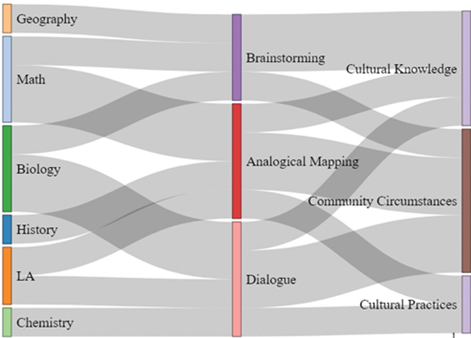
Students engage in a wide range of activities and experiences outside of formal schooling through which they develop rich knowledge and skills. Yet not all students see those experiences reflected in the classroom, and many are often labeled as "deficient," "at risk," or "struggling." When teachers take the time to understand what students know and have learned beyond school walls and help students connect that knowledge to in-school learning, academic outcomes improve.
To support teachers in building this understanding, LRDC research scientist Raquel Coelho and colleague Alden McCollum, Department of Linguistics, New York University, propose a novel, complementary approach to curriculum planning, one that centers student voice and leverages artificial intelligence. Drawing on large-scale datasets of student writing, AI techniques are used to analyze what students care about and find meaningful in their communities. The findings are then translated into reference materials that give teachers a richer window into the communities their students come from, helping them design instruction that connects to the knowledge students already bring into the classroom. As AI continues to evolve, the directions this work points to remain as important as ever, using technology to strengthen the connection between community knowledge and classroom learning.
Coelho, R. & McCollum, A. (2025). Illuminating socially distributed identity resources in student writing through artificial intelligence to support the design of culturally informed learning experiences. Discourse Processes.
Read the full article at Discourse Processes.
Written by Amber Eschrich